
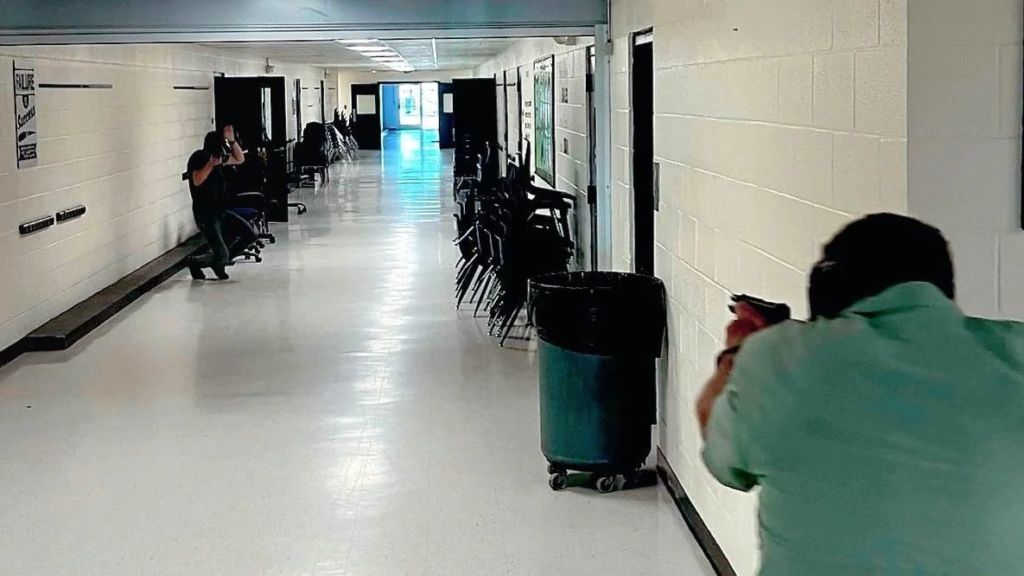
Some teachers in Texas carry guns to class.
That’s not fiction. It’s law.
And in 2025, more school districts are quietly adopting it.
The Texas school guardian law explained in simple terms: it allows trained staff members often teachers or administrators—to carry firearms on campus. But what happens when mental health, child safety, and public trust collide?
Let’s break it down.
What Is the Texas School Guardian Law?
This law gives public school districts in Texas the power to authorise certain employees to carry concealed firearms on school grounds. It’s part of a broader response to rising school shootings.
The program was introduced in 2013 and is often confused with the “School Marshal” program. Here’s the difference:
- Guardians: Can act immediately. They’re typically armed staff like coaches, teachers, or administrators.
- Marshals: Are more like law enforcement-trained responders with stricter state certifications.
Districts choose whether to opt in, and the guidelines can vary depending on local leadership. Most don’t advertise who the guardians are—for safety reasons.
Why This Law Exists: A Quick Look at the History
In the wake of Sandy Hook (2012) and Santa Fe High School (2018), Texas lawmakers pushed for faster response times during active shooter events.
The idea was simple:
If seconds save lives, shouldn’t someone inside the school be ready?
As of 2024, over 400 school districts in Texas have adopted the guardian program.
How the Guardian Program Works in Practice
To qualify, a school employee must:
- Hold a license to carry (LTC)
- Pass psychological evaluations
- Complete 16 to 20 hours of firearm training
- Undergo active shooter drills and safety training
Even after certification, guardians must retrain periodically. Weapons are typically concealed, and identities are kept private—even from students.
This raises the question: are schools becoming safer or just more militarised?
The Pros: What Supporters Say
Faster response times:
In rural districts with long police response windows, guardians can act immediately.
Cost-effective:
Hiring school resource officers can be expensive. Arming existing staff costs less.
Deterrence:
Proponents argue that armed staff could discourage would-be attackers.
Community-driven:
The law gives school boards local control instead of imposing one-size-fits-all rules.
The Cons: What Critics Worry About
Mental health risks:
Educators are already under pressure. Adding weapons into that stress zone raises serious concerns.
Accidental discharge:
Guns in schools create the risk of mishandling—especially in crowded, chaotic environments.
Liability:
If something goes wrong, who’s legally responsible?
Trauma:
Some students and parents report increased anxiety knowing staff might be armed.
This is where Relate Psychological Services steps in. As a mental health provider, we understand that safety goes beyond physical protection. It’s about emotional security too.
Mental Health and the Law: A Silent Crisis?
There’s a missing voice in most conversations about this law: mental health professionals.
How does carrying a weapon affect a teacher’s emotional well-being?
What’s the psychological impact on students?
Are districts also investing in counseling and trauma-informed care?
These aren’t hypotheticals. They’re real questions we face in sessions with Texas families every week.
Real Case Studies from Texas Schools
- Medina ISD: A rural district where trained guardians are credited with preventing potential incidents. The program is community-supported.
- Dallas ISD: Opted not to participate. Officials prioritised counseling programs, conflict resolution training, and school officers instead.
Both districts made different decisions, based on their values. Both care about safety.
There’s no universal solution—but there are consequences to every approach.
Where We Stand at Relate Psychological Services
We’re not here to pick sides.
We’re here to support families, teachers, and children dealing with the emotional aftermath of modern school safety decisions.
Whether your school is in the guardian program or not, your child’s mental health matters.
If you’re a teacher navigating the stress of carrying a weapon…
lass=”yoast-text-mark” />>If you’re a parent struggling with your child’s anxiety around school safety…
>If you’re a student who just wants to feel safe…
We’re here.
Final Thoughts: Is This the Best Way to Protect Students?
Texas has taken a bold step.
The question is are we ready to handle the emotional weight that comes with it?
The guardian law might be effective for some.
But emotional safety can’t be holstered. It must be addressed head-on.
If you’re unsure how this law affects your family, reach out to Relate Psychological Services. We provide licensed counseling tailored for school-aged children, educators, and concerned parents across Texas.
FAQs
Q: Is the School Guardian Program mandatory in Texas?
No. Each district decides whether to adopt it.
Q: How many Texas districts have guardians?
Over 400 districts currently participate.
Q: Are guardians trained in mental health too?
Not typically. That’s a major gap we help address at Relate Psychological Services.